






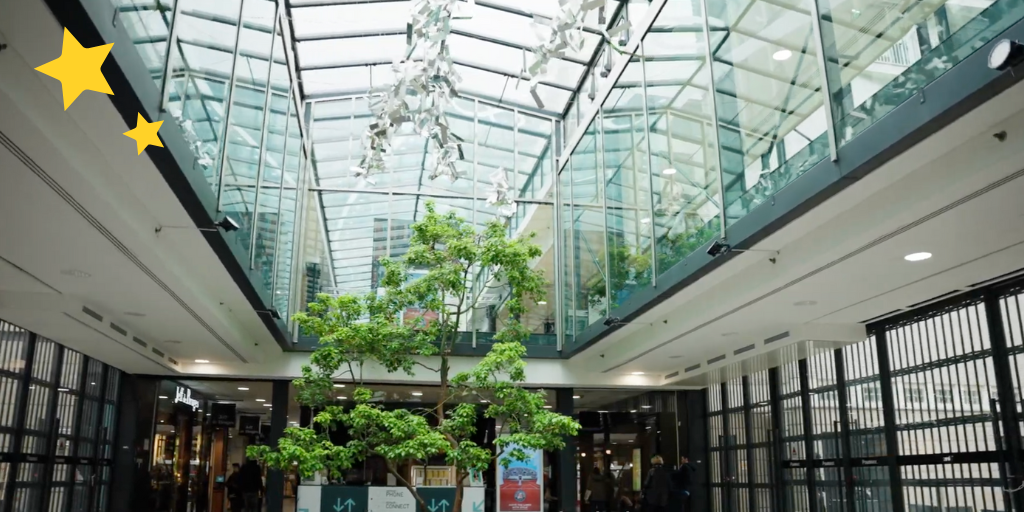
How visitors perceive a shopping centre as a whole influences the overall performance of its retailers and their ability to keep customers coming back.
The reverse is also true: how satisfied customers are with the shops in the centre affects the centre's footfall.
Shopping centre managers therefore need to distinguish clearly between what falls under centre management and what belongs to the retailers.
In the first case, they can use satisfaction data to act on the levers they are directly responsible for.
In the second, they can use the available data as a basis for discussion with retailers.
What are the key customer satisfaction drivers for a shopping centre (excluding shops)?
The key satisfaction drivers a shopping centre controls, outside the shops themselves, are accessibility, cleanliness and maintenance, comfort and communal areas, information and signage, and atmosphere and safety.
The quality of the experience in the centre's communal areas largely determines overall visitor satisfaction and loyalty, whichever retailers are present.
Here are the main areas that centre managers are responsible for and should focus on.
Accessibility
How easily customers can reach the shopping centre is decisive for their overall perception.
Even if the centre offers excellent services and high-performing shops, access problems (even temporary ones, such as roadworks) can seriously hurt performance.
Centres should therefore monitor:
- Road access and public transport: proximity, clear directions, service frequency, etc.
- Car park organisation and flow: space availability, signage, safety, ease of payment, etc.
- Access for people with reduced mobility: ramps, lifts, aisle width, etc.
Cleanliness and maintenance
Cleaning and maintaining the communal areas is the centre's responsibility. A clean environment reassures consumers, encourages them to stay longer and enhances the retail offer.
Centre managers can focus in particular on:
- Regular maintenance of floors, green spaces, glazing, bins and toilets.
- Rapid intervention when an incident or dirt is reported.
One way to track this item is to install quick-rating terminals at toilet exits or in other sensitive areas to monitor customer perception in real time. This tracking can also serve as a basis for discussion if the centre uses external contractors for cleaning and maintenance.
Comfort and communal areas
The quality and friendliness of walkways and rest areas influence how long people stay and whether they intend to come back.
The aim is to make the centre a pleasant place to be, somewhere people want to come, spend time and meet up, not just a place to shop. The spaces must also suit different types of customers: older people, families with young children, etc.
This means providing:
- A variety of seating areas (armchairs, benches), food courts and well-equipped children's areas.
- Family facilities (baby-changing tables, microwaves).
Information and signage
Being able to find your way around the centre easily and spot useful information contributes to customer satisfaction. For example, customers expect to find the shops they want to visit and the communal facilities (toilets, food outlets, etc.) without difficulty.
Centres must make sure they meet the following needs:
- Clear, legible signage for finding your way inside and outside the centre.
- Multilingual signage if visitors come from abroad.
- Visibility for events and temporary communications (events, promotions).
Atmosphere and safety
The overall setting shapes how visitors feel:
- Quality of lighting, sound and scent (suitable music, flattering lighting, no unpleasant smells).
- Sense of safety (visible staff, surveillance equipment, crowd management during events).
The centre can vary the atmosphere around key retail periods (sales, Christmas, events). It should also train staff to welcome customers and handle specific situations.
Distinguishing what falls to the centre manager from what falls to the retailers
To manage satisfaction in a shopping centre, each lever must be tracked with suitable indicators (frequency of negative feedback, satisfaction scores by topic, impact on performance, etc.) and assigned to the party that controls it: the centre manager or the retailer.
A tool such as Wizville lets you monitor customer feedback and track trends so you can adjust action plans in real time. By actively managing these topics, the centre manager creates the conditions for a distinctive overall experience and a lasting competitive advantage for the shopping centre.
This is the approach taken by Klépierre, which uses Wizville's competitor benchmarking feature to steer its strategy at two levels:
- by comparing the overall satisfaction of its centres with that of competing centres in each catchment area;
- by assessing visitor satisfaction with the retailers in its own centres.
This approach lets Klépierre check that its centres keep their leading position or move up the local rankings, and identify the differentiators to activate, whether in the overall experience of the venue or in the retail offer.
The data also feeds discussions with retailers: it serves as a basis for adjusting the tenant mix, reinforcing strengths and supporting the retailers that are lagging behind.
However, the centre's performance also depends on the individual performance of its shops. Retailers are responsible for topics such as:
- In-store welcome
- Product availability
- Merchandising
- In-store service
- Checkout
In the feedback collection set up by the centre manager, customer verbatims may mix points that concern the centre with points that concern the shops. To sort them, ask the following questions:
- Who operates it?
- Who has the budget and resources to act?
- Who interacts directly with the customer on this point?
When managing the centre's customer satisfaction, it is therefore best to structure your surveys so that you clearly separate the items collected from visitors. Then, when analysing verbatims, you can re-categorise what depends on the centre and what concerns the shops. Feedback that concerns both can be handled with the retailers involved at regular meetings.
What set-up do you need to manage shopping centre satisfaction effectively?
An effective set-up focuses first on the communal areas the centre manager is responsible for: it tracks overall satisfaction over time and against competing centres, then analyses what drives it through targeted survey questions and Google review verbatims.
In the customer listening programme, the manager first analyses overall satisfaction in two ways:
- Over time: how is satisfaction changing?
- Against competitors: with competitor benchmarking features, the manager assesses satisfaction compared with competing centres in the catchment area.
Useful indicators include CSAT and, above all, NPS.
Next, to understand what drives satisfaction, surveys include questions on the specific satisfaction items covered above. Analysing the verbatims in Google reviews also brings out the points customers are most sensitive to. The centre can then prioritise topics according to the volume of feedback.
With a customer satisfaction management solution such as Wizville, shopping centre managers can:
- Collect, centralise and analyse feedback in real time
- Generate dashboards and get an overview of customer satisfaction
Internally, the staff responsible for customer satisfaction can share results regularly with all operational teams (security, maintenance, cleaning, etc.). They can also use satisfaction data in their discussions with retailers.
Klépierre applies the two-level benchmarking described above, across each catchment area and within its own centres. This dual analysis helps it manage its tenant mix better, support commercial negotiations with hard data and, ultimately, raise overall visitor satisfaction.
Klépierre customer story
Want to raise customer satisfaction in your shopping centres?
Find out how Klépierre uses customer reviews to feed its action plans and strengthen the competitive position of its centres (video in French).




