




The platform
All-in-one agentic platform for customer satisfaction and online reputation management Customer experience measurement, online reputation, verified reviews, product reviews and competitor benchmarking feed a single AI system. Reviews come in, action plans come out, from head office to every store. Discover the platform 9.1 Satisfaction network-wide In-store advice 4.7 ★★★★★ Lyon 6th 1,240 reviews Cited by AIExplore by module
Wizville brings together customer feedback, public reviews and store-level signals to help each store improve service quality and trust in your brand.
Specialist grocery retailers work with Wizville

 La belle-iloise

A shared management foundation, but the moment when trust is won differs, and so do the dominant themes. Select your segment.
Purchases are frequent, planned and tied to a specific meal: a stock-out forces a substitution, a change of menu or a trip to another retailer. Convenience, advice on preparation and confidence in storage form the core of the promise. Questionnaires distinguish the store visit from delivery, and verbatims mentioning temperature, packaging or storage follow a dedicated pathway.
Freshness, origin and advice drive preference, and value for money is scrutinised. Listening serves as much to fix in-store pain points as to find out whether your commitments are actually PERCEIVED: a promise that is invisible on the shelf creates no felt value. Feedback measures how important, visible and understood a commitment is — it does not prove a claim.
Here, a purchase is often a discovery, a treat or a gift. The product's story, tasting, advice and packaging matter as much as availability. A brand store also sells a relationship: feedback helps you know whether the story lands, whether the range matches local expectations, and whether the shipping experience lives up to the product.
Expectations are at their highest and the slightest dissonance shows: welcome, expertise, sensory experience and premium consistency are judged together. After-sales matters as much as the sale itself, especially for a gift. The scope covered here is retail — stores, delicatessens, workshops and e-commerce; dining, hotels and restaurants belong on another page.
Customers don't separate the range from their visit experience: they judge, all at once, the availability of what they came for, freshness and presentation, price clarity, staff advice, how smoothly checkout went — and then, once home, the taste. A stock-out, a doubt about storage or a misunderstood promotion can weigh more than a friendly welcome. Three levels are read together, without ever being confused.
Perceived quality, taste, choice, origin, value for money, suitability for diets and preferences. A product can be enjoyed despite a missed delivery — and a flawless store can run out of an essential product every week. Two subjects, two owners, two action plans.
Store, website, app, delivery, click & collect and customer service. Breaking points are many: stock that differs between the website and the store, no slot available, incomplete order, misunderstood substitution, waiting at collection, credit note or refund. A generic post-purchase question doesn't tell them apart.
Consistency of execution, local reputation, action priorities store by store. A brand well regarded nationally can show wide gaps from one store to the next: it is at store level that action is possible, so it is at store level that you need to measure.
What makes grocery different is that the experience continues after checkout: the product is consumed, and that is often where the judgement forms. Measuring step by step, channel by channel, means being able to say at which precise moment trust was damaged — and asking while the memory is still fresh and action is still possible.
Inaccurate availability information, opening hours or a slot that can't be found, a promotion misunderstood before even setting off.
Perceived reliability of information before the visit: advertised availability, opening hours, collection or delivery slots, clarity of current offers.
The product they came for is missing, a disorganised aisle, a product shown online but absent from the store, a local range judged too narrow.
Perceived availability, distinguishing one-off from recurring stock-outs, and genuine unavailability from a simple information problem. Wizville does not replace your stock data: it links the incident to its lived consequence.
Freshness or presentation that causes hesitation, an unreadable price per kilo, an origin or commitment that goes unseen, advice expected and nowhere to be found.
Perceived freshness and presentation, clarity of prices and promotions, visibility and understanding of commitments, availability and relevance of advice.
Excessive waiting, a gap between the displayed price and the price paid, a misunderstood loyalty benefit, a self-checkout that freezes.
Smoothness of checkout, perceived accuracy of the price paid, understanding of the loyalty benefit. Wizville does not set prices and does not check promotion compliance: it measures what is understood.
No slot available, an incomplete order, a misunderstood substitution, a doubt about the cold chain, a damaged parcel, waiting at collection.
Perceived order accuracy, acceptance of the substitution, condition of the product and packaging on receipt, waiting at the collection point, effort required when something goes wrong.
Taste below expectations, an unsuitable portion, a shorter shelf life than expected, a recipe that doesn't turn out as promised.
Taste quality, suitability of the pack size, how the product holds up in use. This is where the product review takes over from the journey questionnaire — and where sensitive signals to route to quality are detected.
An unanswered complaint, a credit note that is hard to obtain, customer service that is hard to reach, a public review left without a reply.
Perceived effort to get an answer, satisfaction after resolution, intent to return and recommend — and, on the public side, local rating, volume, recency, response time and response rate.
Before choosing a store, customers look at the local rating, opening hours and what reviews say about welcome, choice or waiting. Before choosing a product, they look for something else: taste, use, texture, pack size, value for money. Two decisions, two sources — and one brand that needs both to improve.
Did the product deliver on its promise in use — taste, texture, preparation, pack size, value for money?
Clarify a product page whose preparation instructions are misunderstood, rethink a pack size that doesn't match how people use it, pass a recurring remark about a recipe on to quality, or promote a product whose reviews are excellent.
Did you find what you were looking for, in a pleasant store, with the advice and smoothness you expected — and was your order correct?
Deal with a stock-out that recurs every week on an essential product, add staff at the time slot when queues build, explain substitutions during order preparation, call back a customer left without an answer.
Five stages linking a piece of feedback, its cause, the right team, the action taken and its measured effect. A network view for head office, concrete priorities for each store.
In grocery, the same handful of subjects comes up everywhere: availability, freshness, price, advice, waiting and delivery. Semantic analysis surfaces them from the verbatims, with their sentiment, frequency and trend — by store, by channel and by period.
A theme is not a cause. "Too expensive" can mean a high absolute price, a misunderstood product benefit, a gap between displayed and paid price, an unreadable promotion, an unfavourable comparison or an unsuitable pack size. That distinction is what makes action possible.
The system separates the isolated incident from the shortage that recurs every week, genuine unavailability from an information failure, and local from national. Wizville does not replace your stock data: it links the incident to its perceived consequence.
A theme in its own right, because it can cover anything from a simple tidiness issue to a sensitive signal. The latter follow a dedicated pathway, described just below.
Price per kilo, labelling, loyalty benefit, deferred offer: the issue is often understanding as much as the amount. Wizville does not set prices and does not check promotion compliance.
Three highly operational themes a store manager can act on immediately: extra staff at a given time slot, a team briefing, explaining substitutions during order preparation.
Some verbatims mention temperature, packaging, dates, allergens or storage. These signals must not sit in an ordinary dissatisfaction flow: they call for a dedicated taxonomy, a priority alert, routing to quality or food safety, traceable handling and a controlled customer response.
Wizville is not a HACCP system, a product traceability tool, or a health inspection or recall system. It makes a signal expressed by a customer visible and delivers it to the authorised team. Public Alim'Confiance data belongs to official inspection and is never merged with a satisfaction score.
Perceived temperature and cold chain, packaging, dates, allergens and labelling, storage: these themes are identified as such at detection, separately from commercial issues.
Recipients, deadlines and escalation levels are defined with your quality and food safety teams — and work alongside your existing compliance and recall tools, without replacing them.
Who received the signal, when, what was done, what was said to the customer: the record exists and can be measured. Being tracked is not being compliant — organisation, evidence and authorisations remain your responsibility.
The value of a listening system does not lie in the volume collected: it lies in reading it accurately. Four distinctions avoid costly conclusions — on stock-outs, on price, on commitments and on commercial peaks.
A stock-out forces a substitution, a change of meal or a trip to another retailer. Feedback must distinguish one-off from recurring stock-outs, the product shown online but absent in store, the range judged too narrow locally, the substitution during order preparation, inaccurate availability information and seasonal effects. Wizville does not replace stock data: the value comes from matching the operational incident with its perceived consequence.
A "too expensive" can cover six realities: an absolute price judged high, a misunderstood product benefit, a gap between displayed and paid price, an unreadable promotion, an unfavourable comparison with a competitor, or an unsuitable pack size. Semantic analysis helps tell these causes apart — Wizville does not set your prices and does not guarantee the compliance of your promotions.
Organic, origin, seasonality, fishing, manufacturing, recipes, packaging, anti-waste: these commitments build trust, provided they are noticed and understood in store. Feedback measures how important a commitment is, how visible and how well understood — never the truth of a claim, which rests on your evidence and your controls.
Holidays, seasonal campaigns, weekends and launches concentrate volumes, stock-outs and waiting — and are decisive moments. The system is then read by period, with daily tracking of critical themes, alerts calibrated to volume and a post-campaign review turned into an action plan. Comparing Christmas with an ordinary week would produce misleading conclusions: the comparison is made peak to peak.
Head office needs to spot network trends, compare formats and arbitrate structural issues. The store manager needs to know what to fix today. These are two readings of the same data, not two tools.
Comparisons are made between stores of a similar profile — format, size, area, seasonality — and peak to peak. A raw ranking between a city-centre store, a station unit and an out-of-town store demotivates without explaining anything, and a network is not managed on NPS alone.
Filters by channel, format, theme and period; local alerts; consolidated reports. The same data read at several altitudes, without duplicating the analysis work.
An owner, a deadline, before/after tracking on the same population. This is what takes customer listening out of the quarterly report — and what makes it possible to check that a pain point has actually receded.
What works in one store is documented and shared. Network coaching is not reduced to a ranking: gaps are used to target support.
Comparison with a relevant reference period, daily tracking of critical themes during campaigns, post-peak review turned into an action plan.
The system is structured by brand, region, store, channel, theme and role. Each level gets a view, rights and actions suited to it — because a pain point nobody owns comes back indefinitely.
Availability comes up in 34% of verbatims and affects 38 stores out of 120, 12 of them for more than three weeks: it is the first issue to investigate with the range team.
A store manager doesn't need all the data: they need to know what, in their store, weighs most on the experience this week — and what is down to the range team, e-commerce or quality rather than to them.
WizAI summarises verbatims, detects themes and suggests priorities. Decisions, trade-offs and action remain with the teams: the assistance replaces neither category management, nor quality, nor the field.
One priority per theme, one owner, one deadline. Beyond that, the action plan becomes a list nobody handles — and customer listening turns back into a report.
Is the theme receding in the verbatims, does the pain point come back after being fixed, is the local rating moving? Without this fifth stage, you don't know whether the action was worth it.
"Very well-kept aisle and a team with good advice. Only downside: the product I come in for every week is often missing on Fridays."
"Impeccable products and a pleasant store. At the end of the day, the wait at the checkout can be long with only one till open."
"They explained where the products come from and suggested how to prepare them. That's exactly why I come back here rather than anywhere else."
"Quick order collection and an efficient team. I would have liked to be told a product had been replaced before arriving."
Before choosing where to shop, a customer looks at the local listing: the rating, the opening hours, and what reviews say about welcome, choice or waiting. Proximity remains decisive — and a brand well regarded nationally can show real gaps from one store to the next.
Invitations to leave a review are neutral and sent according to a rule common to all eligible customers: never a selection of satisfied customers only, no reward, no guaranteed rating, no review deletion. A public reply never exposes an order, a loyalty account or a personal situation.
The network's reviews, attached to the right store and the right themes, from the platforms actually covered by the system. A brand-level view, local action.
The same rating can be about a stock-out, a wait or appreciated advice. Sorting by theme brings out what the average hides — and what can be fixed this very week.
Five indicators tracked per store: this is what a customer hesitating between two addresses actually sees, and where a network's responsiveness is measured.
A pain point that comes back despite action taken is the most useful signal in the system: it shows the cause was not the one you thought.
A good reply acknowledges the feedback, stays measured and factual, says what is being done when possible, then invites the customer to continue privately if the subject calls for it. A draft written in the brand's tone saves store teams time; it does not replace them.
No reply is published automatically: sensitive themes — freshness, storage, allergens, incidents — go through human validation and, if necessary, through quality before publication.
The public gets acknowledgement and direction; the private channel gets the handling, with an owner, an action and a closure. That is also what protects the customer who wrote the review.
Who replies, within what timeframe, with which templates, and which themes go through central validation: the brand sets the framework, the store keeps the reply in context.
The best system links the review to a real action — a stock-out investigated with the range team, extra staff at a given time slot. Handling status is tracked as an indicator in its own right.
"Very well-kept aisle and a team with good advice. Only downside: the product I come in for every week is often missing on Fridays."
Hello, thank you very much for your feedback and for the kind words about the team, who will be pleased to hear it. Not finding the product you came in for is a real inconvenience: we have passed this on to the store manager and to our range team to look at end-of-week restocking. If you wish, let us know the product via our contact page — we will tell you what we have been able to adjust. See you soon in store.
Seasoning judged mild 54% of customers say they add seasoning themselves.
"Tender and really tasty vegetables, ready in ten minutes. It has become our Tuesday-night go-to."
"Very good quality vegetables. I add herbs, the seasoning stays mild — and the pack size would work better for four."
Before choosing a product, customers look for something other than a store rating: taste, use, texture, pack size, value for money. A product review attached to a product, a variant, a market and a date helps the next customer choose — and your teams improve the range.
Lived information — taste, preparation, portion — reduces hesitation where the product page stops. Reviews come from customers whose purchase is verifiable.
How the product is prepared, stored, shared: this material is often worth as much as a consumer test, and it comes in continuously.
Recipe, pack size, packaging, description: recurring themes surface what deserves an adjustment — and what works well enough to be promoted.
Range, quality, product content and e-commerce each find the reading that concerns them, and sensitive signals follow their dedicated pathway.
.png)
Naturalia relies on Wizville to bring together store and e-commerce feedback, detect pain points and give more than 200 stores concrete action priorities. The system measures three channels, with questionnaires tailored to the store and to e-commerce delivery, alerts in case of dissatisfaction, dashboards by management level, semantic analysis of verbatims, and centralised handling of and replies to Google reviews — built into local management routines. Figures published in the Wizville customer story: the improvement in the Google rating is a result observed within this scope, not a guarantee.
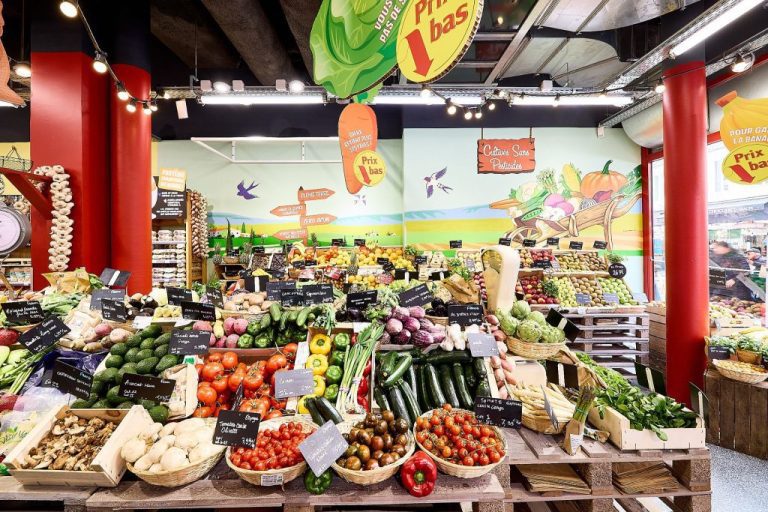
« Wizville helps us coach our stores locally through continuous satisfaction tracking. We were even able to detect that our customers did not always perceive our Made in France offer — an immediate lever for action for us. »
By measuring at the level where action is possible: the store, and for each channel separately. A useful system requires three things. First, collection tailored to the channel and the event — store visit, online order, collection, delivery, customer service, product review — rather than a generic question asked after purchase: it is the only way to tell a stock-out from an information problem, or a missed delivery from a disappointing product. Since grocery purchases are frequent, contact-frequency rules, quiet periods and deduplication avoid over-soliciting regular customers. Next, segmentation by store, format, channel, theme and period: a brand-wide average tells nobody what to do. Finally, multi-level governance — head office sets the framework and spots what is structural, the region supports stores that are falling behind, the store handles its own feedback, and the range, quality and e-commerce teams receive the signals that concern them. Comparisons are made between similar scopes and peak to peak: comparing a holiday week with an ordinary week produces misleading conclusions, and a network is not managed on NPS alone.
Because they answer two different decisions. Before choosing where to shop, the customer checks the local rating, opening hours and reviews about welcome, choice or waiting: that is the store review, which feeds online reputation and store action. Before choosing what to put in the basket, they look for taste, use, texture, pack size, value for money: that is the product review, which reassures at the moment of choice and feeds the range, quality and product content. Alongside these, the post-purchase questionnaire measures a contextualised journey (store, collection, delivery) and customer service resolves a case privately. These four sources are linked without being confused: a store can deliver excellent service while regularly running out of an essential product, and a product can be enjoyed despite a poor delivery experience. Mixing them produces a score nobody knows how to fix. Note: product reviews come from customers whose purchase is verifiable, and the scope applicable to your brand is defined during scoping.
Through semantic analysis, then through two separate pathways. On availability, the analysis surfaces the theme with its frequency, sentiment and trend, store by store: it separates the one-off stock-out from the one that recurs every week, the product shown online but absent from the shelf, the range judged too narrow locally, the substitution poorly explained during order preparation, and simple inaccurate availability information. Wizville does not replace your stock data: the value comes from matching the operational incident with its consequence as perceived by the customer. On freshness, storage, dates, packaging or allergens, the handling is different: these issues fall under a taxonomy of sensitive themes, with a priority alert, routing to quality or food safety, traceable handling and a controlled customer response — never the workflow of a commercial dissatisfaction. Wizville is neither a HACCP system, nor a traceability or recall tool, nor a health inspection system, and public Alim'Confiance data, which belongs to official inspection, is never merged with a satisfaction score. The system makes an expressed signal visible and delivers it to the authorised team.
Going further
The Wizville use cases specialist grocery retailers rely on.
Discover how Wizville tailors listening by channel, verbatim analysis, sensitive-signal routing, network management and review management to your brand, your formats and your range.
Demo tailored to your segments — frozen food, organic and fresh, branded fine food, premium gourmet — to your channels and to your network.