






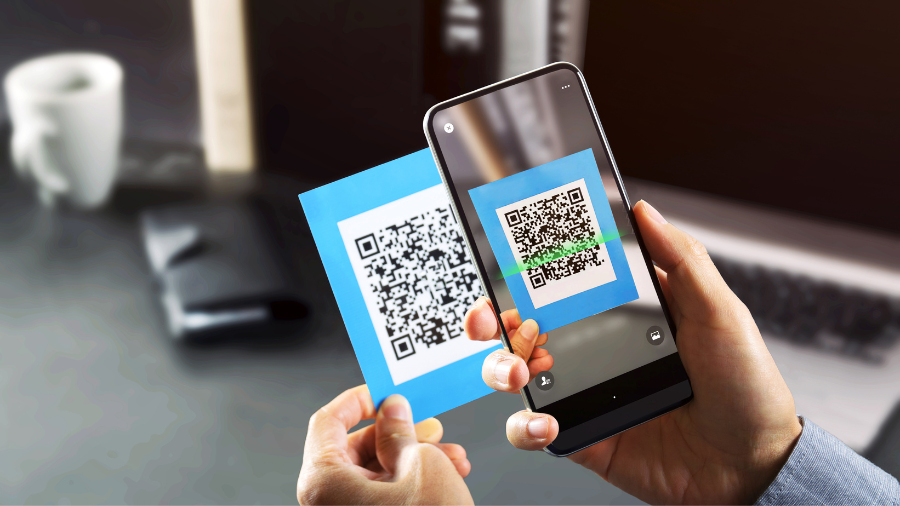
The QR code seemed to belong to the past. But the COVID-19 pandemic gave it a new lease of life.
In 2020, with "contactless" in high demand, QR code use and acceptance of the technology in France reached record levels.
Businesses and retailers can take advantage of this trend by turning the QR code into a new source of customer listening, especially among customers they cannot yet identify.
Why did the QR code make a comeback?
The QR code made a comeback during the COVID-19 pandemic, when businesses looked for contactless alternatives and new smartphones began reading QR codes directly from the camera app.
A brief history of the QR code
The QR code was born in Japan in the 1990s. It was developed by a Toyota group subsidiary to track parts and vehicles. The technology was soon made freely available and spread, reaching its golden age in the early 2010s.
Quick and easy to create and use (QR stands for "quick response"), the QR code spread rapidly, particularly in marketing campaigns. You simply scan the image to access information, usually a dedicated web page.
But the rise of smartphones, apps and dedicated websites soon made QR codes look obsolete. Who still wanted to stop, download a dedicated app and photograph a code?
So was the QR code a thing of the past?
COVID-19 and new uses for the QR code
That is what many thought, until the health crisis gave it a new lease of life.
To avoid disinfecting menus between every sitting, some restaurants started showing customers a QR code. Customers scanned the code with their phone and were taken to the restaurant's menu.
Menus no longer passed from hand to hand, and there was no need to clean them constantly. Everyone gained: the QR code saved restaurants time and made them more efficient, while giving customers a positive experience in the context of the pandemic.
The QR code also played a part in the spread of contactless payment. In 2020, PayPal launched a QR code payment feature. It lets retailers display a QR code in the shop window or on a Perspex screen. Customers scan the code and pay without contact.
Finally, the QR code found a place in public health policy. In France, the StopCovid app gave people infected with the coronavirus a QR code to share with the people they had been in contact with, to encourage them to get tested.
As a result, French consumers got back into the habit of using this channel. The enthusiasm for QR codes was driven not only by the health context but also by the fact that new smartphones build the scanner into their camera app.
How can the QR code support customer listening?
A QR code displayed in store takes customers straight to an online satisfaction survey, so businesses can collect feedback without any physical contact, including from customers they cannot otherwise identify.
A new lease of life for customer listening by QR code
The revival of the QR code opens up new possibilities for customer listening for businesses and retailers.
Customer listening by QR code is not new, but it had never really caught on. It asked too much effort of customers to succeed.
In the early 2010s, scanning a QR code was seen as a hassle. But built-in scanners changed the game, and new habits formed during the health crisis helped anchor the QR code in French consumers' routines.
In this context, QR codes tended to replace satisfaction surveys on touchscreen tablets or smiley-face terminals, which consumers had become reluctant to touch.
It works simply: print the QR code on a display in store to direct customers to an online satisfaction survey. Customers just take out their phone and open the camera, a familiar gesture for most smartphone owners. They can then answer the survey without any further contact.
Which sectors benefit?
Customer listening by QR code is most useful in sectors and situations where few customers can be identified, such as restaurants, hotels, transport and retail customers without a loyalty card.
In sectors where customers are easy to identify through named loyalty cards, the QR code adds little. Since customers are registered in databases, it is easy to contact them by email or text message with a satisfaction survey after their purchase.
By contrast, customer listening by QR code is particularly valuable in situations or sectors with few identified customers.
For example, if you have just opened a new store and your loyalty programme is not yet in place, you can collect customer feedback through this channel.
Likewise, sectors where customers buy only occasionally, for various reasons, have every interest in developing this use. This is the case for restaurants, hotels and transport, for example.
But QR codes could also be used much more widely in retail, precisely to capture feedback from occasional customers who have no loyalty card. How easy it is to generate and share a QR code is a real asset here.
Retailers can display it in store and/or print it on the receipt, so that customers who are not registered in the database can give feedback on their experience.
The health crisis transformed consumer habits in sometimes surprising ways. The unexpected revival of the QR code was largely driven by the wish to limit physical contact. Easy for businesses to create and share, and simple for customers to use, the QR code has plenty of strengths. In a customer listening programme, it lets you reach customers who are not in your database and collect feedback beyond traditional loyalty programmes.
- Topics
- Customer reviews
Wizville



